

Most people either order a skip too small and need a second one, or order a large one and pay to move fresh air. A quick think about volume and access sorts it.
Judging the volume
Skips are sold in cubic yards. A rough guide many people find useful is that a wheelie bin holds about a fifth of a cubic yard, so a small skip swallows the equivalent of a good number of bin loads.
Bulky but light waste — old furniture, plasterboard offcuts, garden clearance — fills volume fast. Soil, rubble and concrete are heavy long before the skip looks full, so a smaller skip is often the right choice for those.
Typical jobs
- Small skip — a bathroom strip-out, a garage or loft clear-out, garden tidy
- Medium skip — a kitchen refit, a full room refurbishment, a bigger garden project
- Builder's skip — house renovation, extension work, general building waste
- Large or roll-on skip — commercial clearances and light, bulky volumes
Where will it stand?
On your own drive is simplest. On the road you will need a permit from the council, and the skip has to be lit and marked. Think about the lorry too: it needs headroom clear of branches and cables, and room to swing the skip off the back.
Load it so it can be collected
Please keep the load level with the top rail. Our drivers cannot legally or safely lift a skip heaped above the sides, and nobody wants to unload it again by hand on your drive.
What cannot go in
Fridges and freezers, tyres, gas bottles, asbestos, paint, oils, chemicals, batteries and electrical items all need handling separately. Tell us if any of that is on site and we will advise.
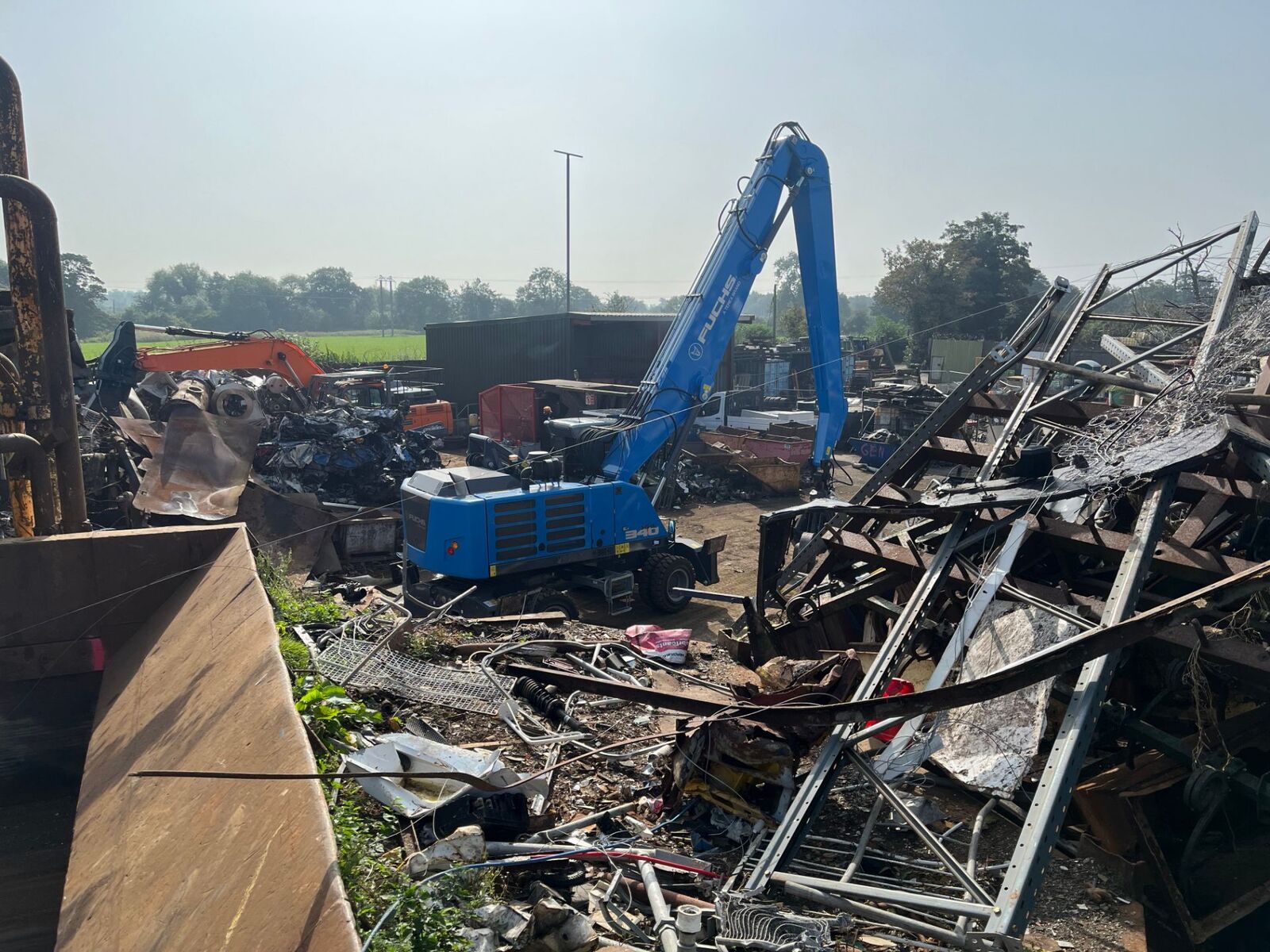
Metal is a special case: if there is a lot of it, do not bury it in the skip. Keep it aside and it becomes something we pay you for rather than something you pay to remove.