

· 4 min read
Most customers see the first five minutes of the process: drive in, weigh, tip, get paid. Here is the rest of it, because it explains a lot about why yards ask what they ask.
Weigh in, weigh out
Your vehicle is weighed loaded, the metal comes off, and you are weighed again. The difference is your weight. Everything is recorded against the transaction along with your identification, which is a legal requirement for every scrap purchase in England.
Grading and separation
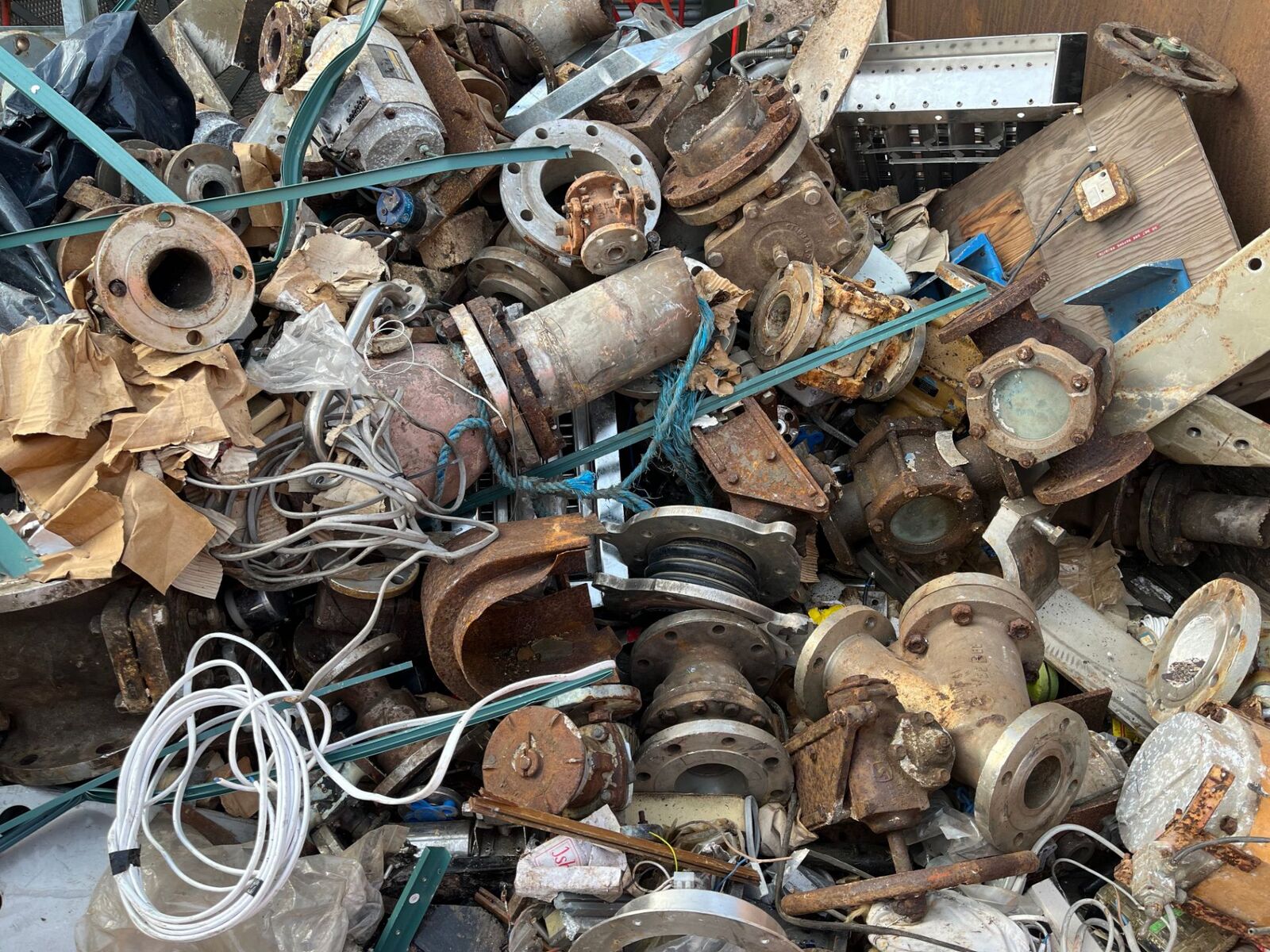
Metal is separated into grades: heavy ferrous, light iron, cast, plate and girder, then the non-ferrous grades — copper, brass, aluminium, lead, stainless. Mixed items such as motors, radiators and valves get broken down so each metal ends up in the right pile.
Cable goes on its own because it is bought on the copper content inside the insulation.
Processing at the yard
Big steel — beams, tanks, machinery, rolling stock — has to be cut into furnace-sized pieces. Our Harris shear handles that on site, and a mobile 40-tonne Euromech shear goes out to jobs where the steel is easier cut where it stands.
Loose light iron is baled or sheared so it can be loaded densely; a lorry that carries air is a lorry nobody can afford to run.
Off to the furnace
Processed ferrous scrap goes to steelworks and foundries, where it is melted with new scrap arriving every day and cast into fresh product. Non-ferrous grades go to specialist refiners. Steel and aluminium can be recycled repeatedly without losing their structural qualities, which is why scrap is a raw material rather than a waste stream.
The bathroom radiator you brought in this month may well be part of a reinforcing bar or a car panel before the year is out.
Why the paperwork matters
Every stage is traceable: your identification at the gate, the weighbridge ticket, waste transfer notes for business loads, and the onward records to the processor. It is what keeps stolen metal out of the trade and what the Environment Agency expects to see.